

Quick answer: Greece vs France residency comes down to what you want your money to do. Greece gives a renewable five-year permit for one property worth €250,000 to €800,000, depending on the area, with no right to work. France gives a talent card of up to 4 years for a €300,000 direct investment in an operating company with jobs, which you run, and you may apply for citizenship after generally 5 years. If you want a holiday home and a Schengen base, Greece is the simpler fit. If you want to build a business in Europe and perhaps settle, France is.
People comparing Greece vs France residency usually want to know which is easier to get, and which is worth more once they have it. The two routes suit different investors: Greece rewards a property purchase, France a business investment. Below we compare Greece vs France residency point by point, using only official Greek, French and EU sources.
Key facts at a glance
- Greece: one property worth €800,000, €400,000 or €250,000, depending on the area and type.
- France: a €300,000 qualifying direct economic investment in an operating company with jobs, held for 5 years. Passive real estate does not qualify.
- Permit length: 5 years in Greece, renewable while you keep the property. Up to 4 years in France, renewable subject to continued eligibility.
- Work: none on the Greek investor permit. The French investor card is built around running your business.
- Citizenship: 7 years of residence and an exam in Greece. In France you may apply after generally 5 years, with B2 French; never automatic.
In this guide: The real difference · How much you invest · Side-by-side table · Validity and renewal · Work and business · Citizenship · Family · Cost of living · Which suits whom · How to decide · Documents · Common mistakes · FAQs
Greece vs France residency: what is the real difference?
The Greek route is a property route. Article 100 of the Greek Migration Code (Law 5038/2023), as replaced by Article 64 of Law 5100/2024, grants a five-year residence permit to a non-EU national who owns Greek real estate of a set minimum value, or who holds a long-term lease of hotel or tourist accommodation of the same value (Law 5100/2024, Gazette A’ 49, via the Ministry of Migration and Asylum). You do not have to live there. You may not work there either.
The French route is a business route, and the one we specialise in. The France residency by investment programme uses the “talent – economic investor” card. Service-Public.fr lists three conditions: you invest personally or through a company you run or hold at least 30% of, you create or safeguard jobs (or commit to), and you invest at least €300,000 in tangible or intangible fixed assets in France (Service-Public.fr, talent card). In practice that means a qualifying direct economic investment in an operating company with jobs, held for 5 years. Buying a flat to live in or let does not count.
So this is less a question of price than of role. Do you want to hold an asset, or run one?

How much do you need to invest for Greece vs France residency?
Greece raised its thresholds in 2024. Since Law 5100/2024 took effect on 5 April 2024, the minimum for the Greek investor permit depends on where the property is and what kind it is. The Ministry of Migration and Asylum restated the tiers in its circular of 21 April 2026 (Circular 1/2026 on Article 100, Diavgeia).
| Greek tier | Where or what | Extra conditions |
|---|---|---|
| €800,000 | The Attica region, the Thessaloniki regional unit, the Mykonos and Thira (Santorini) regional units, and islands with more than 3,100 inhabitants at the last census | One single property. A built property needs at least 120 m² of main living space. |
| €400,000 | All other areas of Greece | One single property, again with the 120 m² minimum for built property. |
| €250,000 | A property whose main areas change from another use (for example commercial) to housing, or a listed building bought for restoration | One property. The change of use must be finished before you apply. A listed building must be fully restored before the first renewal and cannot be sold before then. |
Article 100 also says the full price must be paid before you apply, by crossed cheque into a payment account at a bank in Greece, by credit transfer or by card through a payment provider operating in Greece. The 120 m² rule does not apply to the €250,000 conversion tier.
France has one figure: €300,000 for the French investor card, whatever the region, with no floor-area rule and no property involved. Like any business investment, it carries risk. Capital can be lost, the stake may not be easy to sell, and the final legal documents of the investment govern what you hold.
Greece vs France residency side by side
An indicative comparison from the official sources listed at the end. Rules change, so use it as a starting point.
| Point | Greece (investor permit, Art. 100) | France (talent – economic investor) |
|---|---|---|
| Minimum investment | €800,000, €400,000 or €250,000 depending on area and property type | €300,000 |
| Investment type | Real estate, or a long-term lease of hotel or tourist accommodation | Direct economic investment in an operating company with jobs, held 5 years; no passive real estate |
| Permit validity | 5 years, renewable for 5 years at a time while you keep the property | Up to 4 years, renewable subject to continued eligibility |
| Processing | The law sets a decision within 2 months of a complete file | 2 to 5 months* |
| Government fees | €2,000 permit fee plus €16 for the card | €350 in tax stamps when the card is issued |
| Family | Spouse or registered partner, children up to 21, and the parents of both spouses | Spouse and minor children on “talent-famille” cards, without family reunification |
| Work rights | None, neither employment nor self-employment | You run your investment; the spouse’s card allows any professional activity |
| Language | None for the permit | None for the permit; B1 later for a first resident card, and B2 to naturalise (since 1 January 2026) |
| Path to citizenship | 7 years of lawful and permanent residence, a written exam (PEGP) and proof of integration | May apply after generally 5 years of habitual residence; discretionary, never automatic |
| Short-term letting | Banned for properties bought under the current rules | Not relevant: property is not the investment |
*Subject to individual eligibility and decisions by the competent French authorities.
We left tax out on purpose. A residence permit and tax residence are separate questions in both countries.
How long is each permit valid, and how is it renewed?
The Greek investor permit runs for five years. Article 100 lets you renew it for the same length each time, as long as you still own the property (or the lease is still in force) and the other conditions are met. The law also says that periods spent outside Greece do not block a renewal, which is why the route suits people who visit rather than relocate.
The French investor card lasts up to 4 years and can be renewed subject to continued eligibility. In practice the company must still be trading, the investment held and the job commitments met. Renewal follows the business.
Can you work or run a business on either permit?
Here the two routes part company. Article 100 says the Greek investor permit gives no right of access to any form of work. The Ministry’s 2026 circular adds that holders may own companies as shareholders, partners or non-executive directors, as long as they do not work in them or act as legal representative or executive director.
If you want to earn a living in Greece, the Greek investor permit is the wrong tool. Holders can ask to switch to another category, such as a work permit, but that is a separate application with its own conditions.
The French card works the other way round. You get it because you are investing in, and running, an economic activity in France. Your spouse’s “talent-famille” card allows salaried and self-employed work, according to Service-Public.fr. That matters when both partners want a career.

Which route leads to citizenship, and how fast?
Greece. The Ministry of Interior’s entry in the national procedure registry lists the “permanent investor residence permit” among the residence titles that count towards naturalisation (Mitos, naturalisation of foreign nationals). The applicant must have lived in Greece lawfully and permanently for 7 years before applying. They must also pass the written exam for the Certificate of Sufficient Knowledge for Naturalisation (PEGP), which covers the Greek language, history, geography, culture and institutions, and is held twice a year. They must also show economic and social integration, with Greece as the settled centre of their life. The application fee is €550.
That last condition is where many golden-visa holders come unstuck. The Greek investor permit needs no time in Greece; citizenship expects you to have lived there.
France. Holders of the French investor card may apply for naturalisation after generally 5 years of habitual residence (Service-Public.fr, naturalisation). Since 1 January 2026 the language level is B2, spoken and written (Service-Public.fr, language level). The application costs €255 in tax stamps. Naturalisation is discretionary, so being eligible to apply is never the same as being granted citizenship.
On paper, Greece vs France residency is a 7-year versus 5-year wait before you can apply. In both countries the years only count if you really live there.
What about your family?
Greece casts the wider net on family. The 2026 circular confirms that family members draw their right directly from the investor: the spouse or registered partner, the children of either spouse, and the parents of both. Children are covered as family members up to the age of 21. At 21 they can move to their own standalone permit, which runs from 21 to 24, as a bridge to another status.
France covers the core family. Under the simplified “accompanying family” procedure, your spouse and minor children receive “talent-famille” cards for the length of your stay, without going through family reunification. Children who arrived as minors can get their own talent-famille card once they come of age. Parents are not covered by this procedure.
For a UAE family with grandparents at home, that alone can decide it.
Is Greece cheaper to live in than France?
Yes, on average. Eurostat’s price level index for actual individual consumption (what households consume) puts Greece at 84 and France at 106.4 for 2025, against an EU average of 100 (Eurostat, prc_ppp_ind_1). So everyday goods and services cost roughly a fifth less in Greece.
National averages hide a lot, and central Athens, Mykonos or Paris will feel dearer. Someone who lives mostly in Dubai only pays Greek prices a few weeks a year.
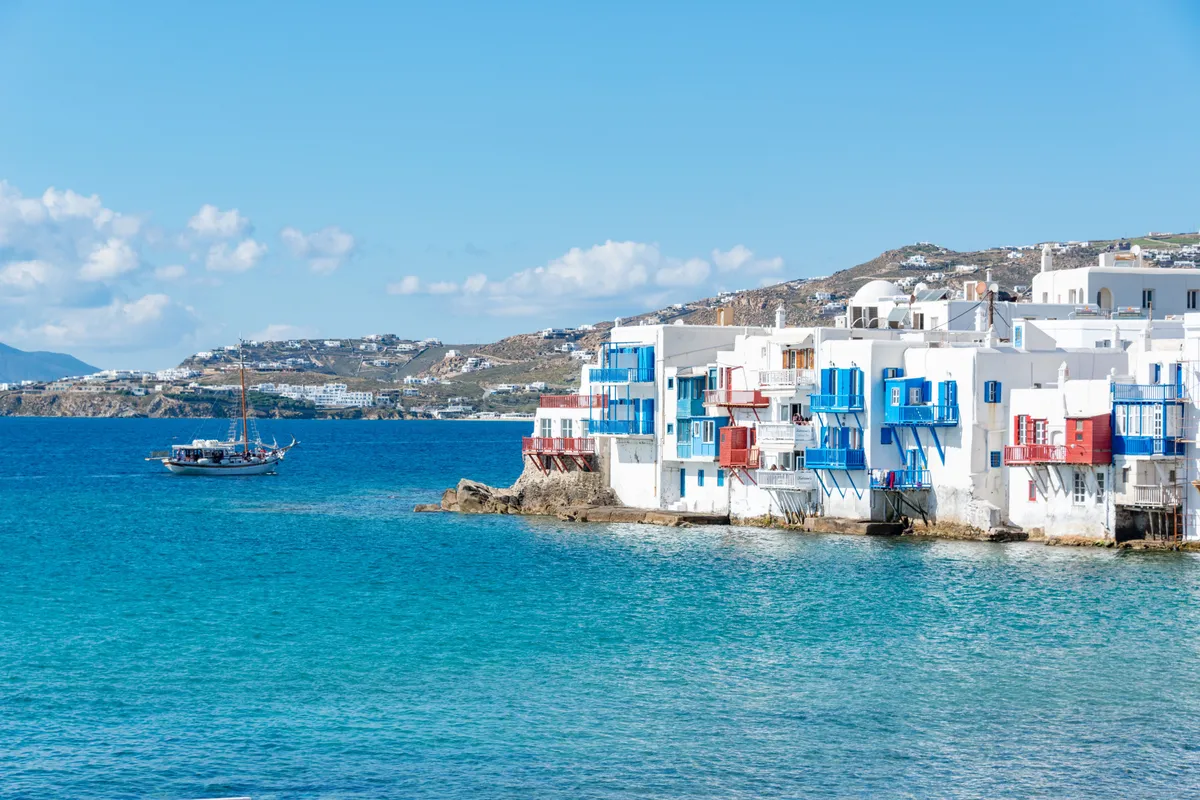
France or Greece: which suits whom?
If you are based in the UAE, the real question is what a second foothold in Europe should do for you.
- The passive investor. You want a holiday home in the Schengen area and no obligation to move. Greece fits, provided you accept no short-term letting and no work.
- The business owner. You run companies from Dubai and want to expand into the EU, hire staff and stay hands-on. France fits, because the French investor card is built around exactly that.
- The family planning a real move. Children heading to European schools and a spouse who wants a career. France gives the spouse work rights and a shorter path to a citizenship application.
- The family with grandparents. Greece includes the parents of both spouses under the Greek investor permit. France’s accompanying-family procedure does not.
Neither route is better in the abstract. It depends on whether you plan to live and earn in Europe, or just want a door you can open later.
One practical point for UAE residents. In Greece you apply after entering lawfully on any visa. For France, someone living abroad applies to the French consulate in their country of residence, so you start in the UAE.
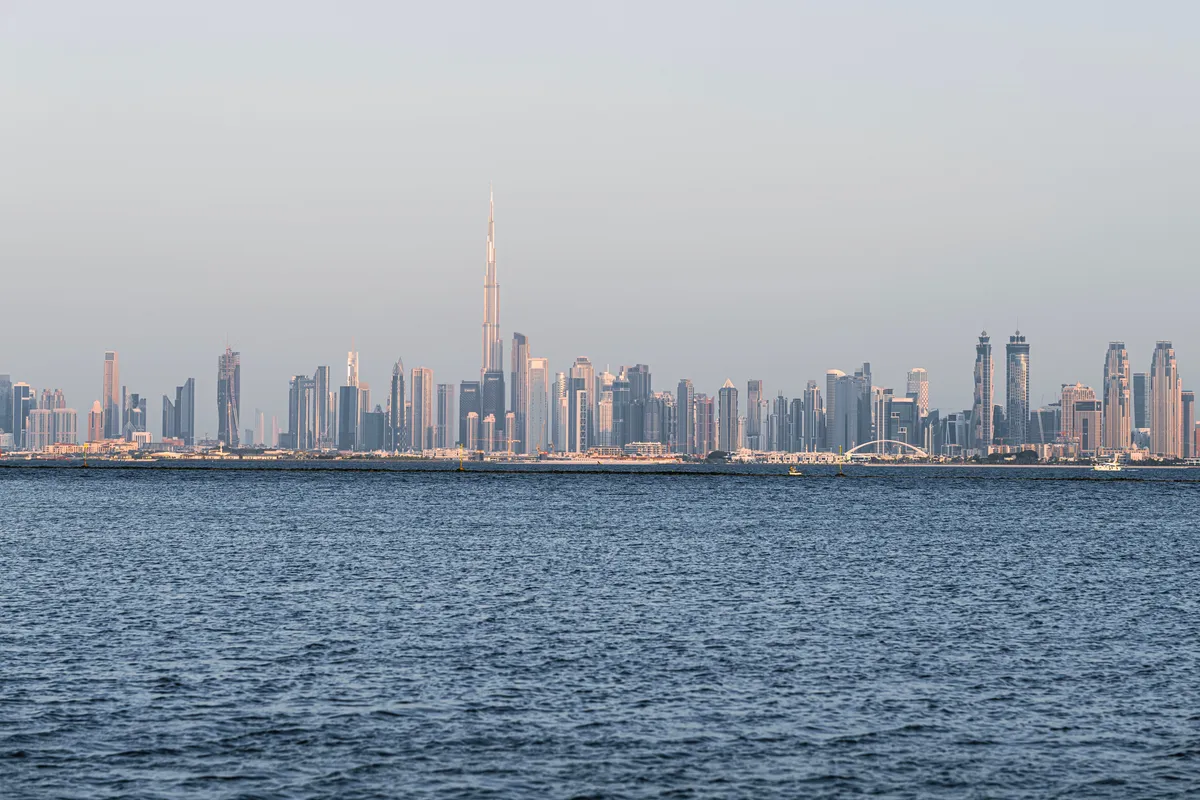
How to decide between Greece and France in 5 steps
- Decide how you will use the residence. Occasional visits point to Greece; moving and working point to France.
- Decide what you want to own. A home, or a stake in a company you help run. This alone often settles France or Greece.
- List who must come with you and check each person against the family rules above.
- Be honest about citizenship. If a second passport is the goal, count the years you will really spend in the country and the exam you must pass.
- Get the investment checked. In Greece, have a lawyer and notary confirm the zone, floor area and use before you sign. In France, ask for a free preliminary eligibility assessment before committing money.
What documents does each route need?
Greece (initial investor permit), based on Article 100 and the official procedure pages:
- Application form, photographs and a valid passport with your entry visa (or Greek residence title)
- Private health insurance covering all risks
- The notary’s certificate on the purchase: parties, property, price and payment
- A land registry or cadastre certificate showing no encumbrance, and your E9 property declaration
- The €2,000 permit fee and the €16 card fee
France (talent – economic investor), based on Service-Public.fr:
- A business plan with a letter committing to annual job creation
- Proof that the direct investment of at least €300,000 has been made, or a commitment to make it in France
- Proof of jobs created or safeguarded, or a commitment to do so within 4 years of the investment
- A signed commitment to respect the principles of the Republic
- The €350 tax stamp when the card is issued
Common mistakes
- Planning to rent the Greek property on Airbnb. Property bought for the Greek investor permit may not be let short-term through the sharing economy or sub-let. The penalty is losing the permit and a €50,000 fine. Long-term lets are allowed.
- Splitting the budget across two Greek flats. The minimum must now be met with one property, and in the €400,000 and €800,000 tiers it must have at least 120 m² of main space. Parking spaces and storerooms do not count.
- Expecting to work in Greece. The Greek investor permit gives no access to employment or self-employment.
- Treating France as a property route. A home in France does not qualify for the French investor card.
- Assuming citizenship follows automatically. In both countries it is a separate, assessed application.
Greece vs France residency FAQs
Is France or Greece better for residency?
It depends on your plans. For France or Greece, the dividing line is simple. Greece suits a passive property owner who will not move. France suits an investor who wants to run a business, bring a working spouse and possibly apply for citizenship after generally 5 years.
What is the minimum investment for Greek residency in 2026?
€800,000 in Attica, Thessaloniki, Mykonos, Santorini and islands of more than 3,100 people, €400,000 elsewhere, and €250,000 for conversions to housing or listed buildings. Each tier means one single property.
Can I buy property in France to get residency?
No. The French investor card needs a €300,000 direct economic investment in an operating company with jobs, held for 5 years. Passive real estate does not qualify.
Can I rent out my Greek golden visa property?
Long-term, yes. Short-term platform letting and sub-letting are banned for property bought under the current rules, with loss of the permit and a €50,000 fine.
Do I need to speak Greek or French?
Not for either permit. Greek citizenship needs the PEGP exam. In France, B1 is needed for the first resident card and B2 for naturalisation since 1 January 2026.
Can I live in Dubai and keep either permit?
The Greek investor permit can be renewed after periods abroad while you keep the property. The French investor card follows your business and its continued eligibility.
Risk note: any investment can lose value. A business stake may be hard to sell, property prices move, and the final legal documents of each investment govern. Nothing here is a promise of a permit, a return or citizenship.
How The Open World can help
France is our specialist route. For the economic investor card we work with France IDEA, and KPMG Avocats has reviewed the legal and technical aspects of the programme. We offer a free preliminary eligibility assessment and can explain the 5-year holding period and the job commitments before you decide. For background, see our guides on France visas for investors and entrepreneurs, Portugal vs France, Spain vs France and France vs Belgium, and our Greece golden visa guide. To talk it through, contact our Dubai team at Park Lane Tower, Business Bay, on +971 58 568 1810 or at charlie@the-open-world.com.
Official sources
- Greek Ministry of Migration and Asylum: Law 5100/2024, Article 64 (Government Gazette A’ 49, 5 April 2024), replacing Article 100 of the Migration Code
- Greek Ministry of Migration and Asylum: Circular 1 on Article 100, 21 April 2026 (Diavgeia ΨΣΙ746ΜΔΨΟ-ΔΧΜ)
- Greek Ministry of Migration and Asylum: Golden Visa
- Mitos (Greek national registry of procedures): investor permit fees and naturalisation
- Service-Public.fr: talent card, talent-famille card, naturalisation, language level for naturalisation
- Eurostat: price level indices, actual individual consumption (2025)
Last updated: 5 November 2026. All official sources checked on 5 November 2026. This guide is general information, not legal or tax advice. Greek rules are summarised as neutral information only.